GPS Tracking Laws Canada: What Employers Need to Know
In the dynamic world of field service, efficiency, accountability, and safety are paramount. GPS tracking technology offers an invaluable solution, providing real-time visibility into your mobile workforce, optimizing routes, improving dispatch, and enhancing customer satisfaction. However, for Canadian employers, leveraging this powerful tool comes with a critical responsibility: understanding and complying with the country's nuanced privacy laws.
As an owner or manager of an HVAC, plumbing, electrical, home care, cleaning, landscaping, or delivery company, you operate in a highly competitive environment. The benefits of GPS tracking – from accurate timekeeping to improved response times – are undeniable. Yet, the legal implications surrounding employee privacy can feel like a minefield. The good news? With the right knowledge and the right tools, you can harness the full potential of GPS tracking while staying fully compliant and fostering trust with your team.
The Power and the Peril of GPS Tracking in Canada
GPS tracking offers transformative advantages for field service operations:
- Enhanced Efficiency: Optimize routes, reduce fuel costs, and improve dispatching.
- Improved Accountability: Verify job site arrivals, track work progress, and ensure accurate billing.
- Increased Safety: Locate employees in emergencies and provide support when needed.
- Better Customer Service: Provide accurate ETAs and demonstrate proof of service.
However, these benefits must be balanced against an employee's reasonable expectation of privacy. In Canada, privacy is a fundamental right, protected by a patchwork of federal and provincial legislation. Missteps can lead to legal challenges, reputational damage, and a breakdown of trust with your employees.
Understanding Canadian Privacy Laws for Employers
Canada's approach to privacy is multi-layered, involving both federal and provincial statutes. For most private sector organizations, the primary federal law is the Personal Information Protection and Electronic Documents Act (PIPEDA). However, some provinces have their own substantially similar private sector privacy legislation (e.g., Alberta, British Columbia, Quebec), which takes precedence within those provinces.
Regardless of whether PIPEDA or a provincial equivalent applies, the core principles remain consistent:
Key Principles of Privacy Compliance:
- Consent: You must obtain meaningful consent from employees before collecting, using, or disclosing their personal information, including location data. This consent must be informed and voluntary.
- Necessity and Proportionality: The collection of GPS data must be necessary to achieve a legitimate business interest, and it should be proportionate to that interest. You can't collect more data than is reasonably required.
- Transparency: Employees must be fully informed about what data is being collected, why it's being collected, how it will be used, and who will have access to it.
- Purpose Limitation: GPS data should only be used for the purposes for which it was collected and consented to. You cannot, for example, use tracking data collected for route optimization to monitor personal activities during off-hours.
- Accuracy: You must make reasonable efforts to ensure the GPS data collected is accurate and up-to-date.
- Security: Robust security measures must be in place to protect GPS data from unauthorized access, use, disclosure, alteration, or destruction.
- Access and Correction: Employees have the right to access their personal information and request corrections if it's inaccurate.
- Accountability: Your organization is responsible for complying with these principles, even if you outsource data processing.
Distinguishing Work Hours vs. Personal Time
A critical distinction for employers is tracking during work hours versus personal time. Generally, employers have a stronger legitimate business interest in tracking during paid work hours when employees are using company vehicles or equipment. Tracking employees during their personal time, or when they are using personal vehicles not reimbursed for work travel, is far more difficult to justify legally and ethically. Ensure your policies clearly define when tracking is active.
Best Practices for Compliant GPS Tracking
To navigate the legal landscape successfully, implement these best practices:
- Develop a Clear, Written Policy: Outline your GPS tracking practices in a comprehensive, easily understandable policy. Distribute it to all employees and ensure they acknowledge receipt.
- Obtain Informed Consent: Clearly explain the tracking technology, its purpose, and the data collected. Obtain written consent from employees, ideally before implementation.
- Limit Tracking to Work-Related Activities: Design your system to track only during work hours or when company assets are being used for work purposes.
- Focus on Legitimate Business Interests: Articulate and document the specific business reasons for tracking (e.g., safety, efficiency, customer service, payroll accuracy).
- Secure Data: Implement strong data encryption, access controls, and retention policies to protect sensitive location data.
- Train Managers: Ensure all managers understand the policy and legal obligations to avoid misuse of data.
- Regularly Review Practices: Periodically review your GPS tracking policy and practices to ensure ongoing compliance with evolving laws and best practices.
FieldStaff Workforce: Your Partner in Compliance & Efficiency
This is where modern field service management software like FieldStaff Workforce becomes indispensable. FieldStaff is not just a tracking tool; it's a comprehensive platform designed to help you meet your operational goals while naturally supporting compliance with Canadian privacy laws.
How FieldStaff Workforce Solves Your Challenges:
- GPS Clock-In & Real-Time Tracking: FieldStaff's intuitive GPS clock-in ensures that tracking begins precisely when an employee starts their shift and ends when they clock out. This clearly defines work hours, aligning perfectly with the principle of limiting tracking to work-related activities. Real-time tracking provides visibility only when it's legitimately needed for dispatch, safety, or progress updates, supporting proportionality.
- Geofencing: Set up geofences around job sites or office locations. This automates time tracking, verifying employee presence at designated work areas and preventing tracking outside of work-specific zones. It's an elegant solution for ensuring compliance and accurate payroll without intrusive, continuous monitoring.
- Automated Scheduling & Shift Management: With automated scheduling and shift management, employees have clear expectations about their work hours and locations. This transparency fosters trust and helps establish the legitimate business interest for tracking during these defined periods.
- Digital Daily Logs & Mobile Dashboard: Employees can use the mobile dashboard to complete digital daily logs, recording their activities, materials used, and job status. This creates a transparent, auditable record of work performed, complementing GPS data with qualitative information and providing valuable documentation for compliance.
- Secure Data Management: FieldStaff Workforce is built with robust security features to protect sensitive employee data. This helps you meet your obligation to safeguard personal information against unauthorized access or disclosure.
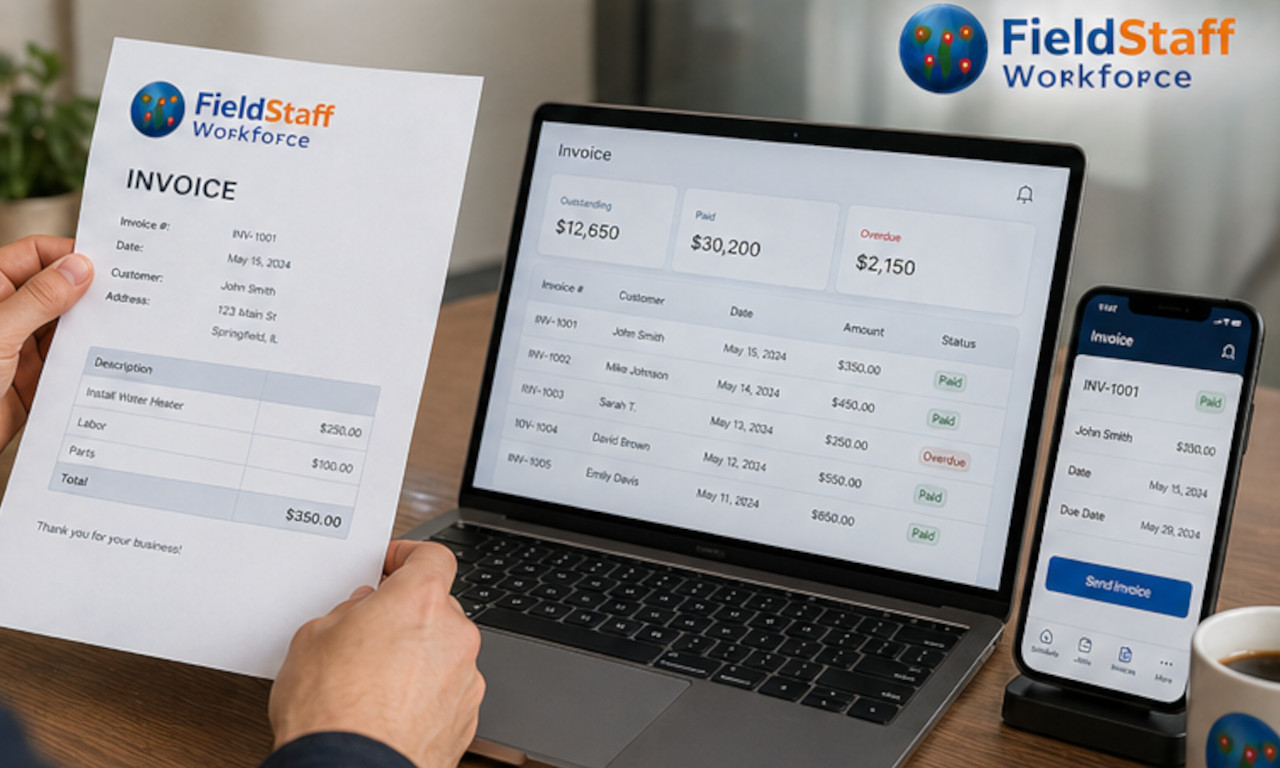
- Streamlined Invoicing: Accurate GPS-backed time tracking directly feeds into invoicing, ensuring clients are billed correctly for services rendered, further demonstrating the legitimate business purpose of the data collected.
Beyond Compliance: The ROI of Smart Tracking with FieldStaff
Implementing FieldStaff Workforce isn't just about avoiding legal pitfalls; it's about transforming your business:
- Time Saved: Eliminate manual time cards, reduce administrative burden, and streamline dispatch – freeing up hours for growth.
- Money Saved: Optimize routes to cut fuel costs, prevent time theft with accurate clock-ins, and reduce overtime errors.
- Fewer Headaches: Resolve employee disputes with clear data, simplify payroll, and enjoy peace of mind knowing you're operating compliantly.
- Happier Workers: Transparent policies, fair and accurate pay, and clear communication fostered by FieldStaff's tools lead to a more engaged and satisfied workforce.
FieldStaff Workforce scales with your business, whether you manage 5 field workers or 500+. It provides the tools you need to maintain a competitive edge, ensure operational excellence, and, crucially, uphold your legal and ethical responsibilities as a Canadian employer.
Choose the Right Partner for Your Field Service Business
Navigating GPS tracking laws in Canada requires diligence, transparency, and the right technological support. By partnering with FieldStaff Workforce, you gain a powerful ally that not only streamlines your operations but also helps you build a foundation of trust and compliance.
Don't let legal complexities deter you from harnessing the benefits of modern workforce tracking. Empower your team, delight your customers, and secure your business's future with FieldStaff Workforce.
Ready to see how FieldStaff Workforce can transform your operations while ensuring compliance?
Ready to Modernize Your Field Team?
Get GPS clock-in, automated scheduling, digital daily logs, and live dispatch. Start a free trial — no credit card required.
Call 905-929-7322